
The term Search Engine Optimization (SEO) means a set of measures aimed at improving the position of an online store in search results on Google, Yandex, etc.
It is necessary to understand that if the store is young (less than 1 year since indexing by search engines) and offers goods or services with many competitors, it will be very, very difficult to get the store into the TOP-5 positions. This is because search engines initially treat new stores with "distrust."
Of course, using black and gray methods, you can artificially boost the store's rating, which will lead to a short-term appearance in the TOP, but then a drop in search results is very likely, and it may even lead to the store being excluded from the search index for several months.
Therefore, it is correct at the initial stage, along with SEO, to engage in contextual advertising on Google and Yandex.
Two types of Shopify store promotion can be distinguished:
- the store itself
- specific products in the store
It is also necessary to highlight promotion directions:
- preparation of the store website and product cards
- ensuring links to the store from quality websites
- promotion on social networks
Preparation of the store website and product cards
There are 2 unconditional rules for filling out product cards in the store, compliance with which will allow successful promotion of the store in search engines:
- quality content
- unique content
Quality Content
Quality, as understood by customers, means usefulness. The structure and content of the store should be prepared in a way that provides maximum benefit to customers.
Unique Content
Uniqueness means an original approach to preparing texts. Under no circumstances should you copy text word for word from other websites. Simply replacing words with synonyms won't help either — search engines recognize this technique. Find authors who will prepare unique texts. Be sure to check these texts for uniqueness upon acceptance using services Miratools.ru. Protect all unique material using mechanisms offered by Google and Yandex.
- Store Catalog Structure
- Product Cards
Store Catalog Structure

Let’s imagine a store with 3,000 product items. Which product classification option is more preferable from the search engine’s perspective: without grouping or with grouping (collections)? Of course, grouping is better. Therefore, when preparing the product catalog, analyze customer demand based on their needs. Group products according to customer queries. Services like Google Adwords and Yandex:Wordstat will help analyze search queries.
If a store with 3,000 items has 10 or 50 groups, which grouping option is more preferable from the search engine’s perspective? Of course, the one with 50 groups.
Product Cards
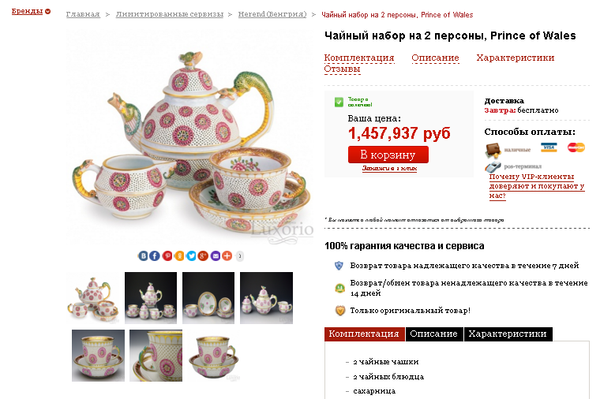
- Product Name
- Product Description
- Product Photos
- Product Video Demonstration
- Customer Engagement
- Product Purchase Features and Instructions
- Reviews
- Price
- Dimensions and Weight
- Current Stock
- Warranty
- Certification Information
- Country of Origin
Product Name
The product name should include not only the brand, model, etc., but also the keywords most commonly used to search for the product.
Product Description
The product description should be prepared very carefully. Avoid copying descriptions from the manufacturer’s or competitor’s website. Search engines can exclude duplicate information from search results. Even if you have several products with similar characteristics — be creative. Do not duplicate descriptions. The description text must contain keywords related to the product. But don’t overdo it — the keyword usage frequency threshold in the text is 4-6% of the description.
Product Photos
Do not try to copy product images from a competitor's website. This will result in the competitor's product appearing in search results instead of yours. Allocate a budget for a photoshoot. Ensure you get high-quality photos. In most cases, the product image is better perceived on a white background — you need to clean the image background. Monitor file sizes and avoid making them too large. The file name should contain keywords describing the product and the model name. After adding product photos to the product card, be sure to fill in the title for each photo mentioning the word "photograph" or "photo," and do not neglect filling in the alternative text for the photo.
Product Video Demonstration
Posting a product video review only improves the quality of product information presentation from the search engine's perspective
Customer Engagement
For some product categories, demonstrations using augmented reality technology or virtual demonstrations are possible. For example, a customer can immediately try on favorite glasses or jeans. Some products can also be presented as a 3D model, allowing the product to be viewed from all sides.
Product Purchase Features and Instructions
Provide information about non-obvious features of purchasing the product. For example, the absence of necessary items in the product package and suggest including them in the purchase set. A link to instructions will also increase the value of the product page.
Reviews
Active customer feedback on the product page will signal to search engines the product's relevance, which can lead to a higher product ranking in search results.
Ensuring links to the store from quality websites

- If possible, get a link to your store placed on the manufacturer's website
- Publish press releases on specialized sites
- Register the site as a Google Trusted Store and add it to Yandex:Catalog
- Participate in discussions on thematic forums with links to the website
- Order the placement of interesting information from well-known bloggers, for example, from Exler
Social Media Promotion

Having activity on social media pages will only boost the store's rating. Avoid artificially inflating group members; focus on quality. Note that some networks already allow direct product sales by placing a Buy button. These are Facebook, Twitter, Pinterest.
A common mistake is duplicating the same information across all promotion channels. Prepare descriptions for each channel depending on its features, including a link to the relevant page on the website.
Facebook and VKontakte require information in several paragraphs, Twitter limits messages to 140 characters, and blogs already imply including detailed text. Always accompany the message with visual content (photos, videos). For easier information perception, a practical rule has been developed — after every 3 paragraphs of text, photos or videos should be placed.
- VKontakte
- Google+
- Blogs


